Loading Spinner

Albertus Seba Sold at Auction Prices

b. 1665 - d. 1736

See Artist Details

0 Lots

Sort By:

Categories

Auction Date

Seller

Seller Location

Price Range

to
  • Seba - 4 Shell Engravings
    Sep. 05, 2026

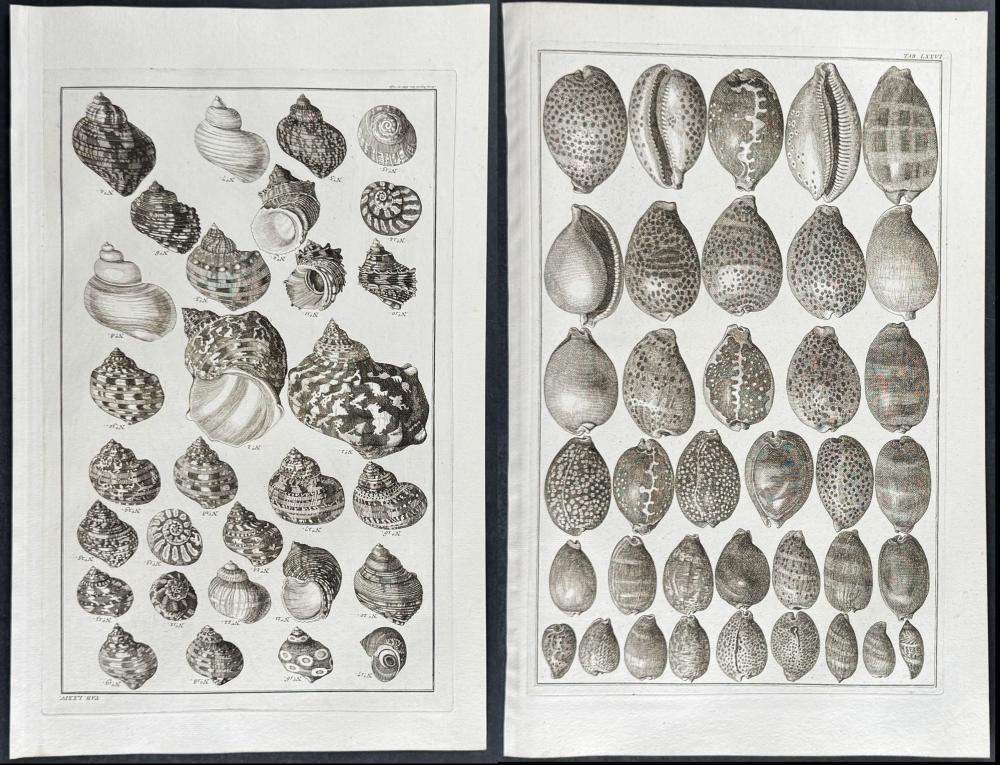
    Seba - 4 Shell Engravings

    Est: $1,500 - $2,500

    This artistically composed, scientific folio engraving is from Albertus Seba’s "Locupletissimi rerum naturalium thesauri accurata descriptio, et iconibus artificiosissimis expressio, per universam physices historiam". The work was published in Amsterdam between 1734 and 1765. Plates from volumes 1 & 2 were published by Janssonio-Waesbergios, & J. Wetstenium, & Gul. Smith; Volume 3 by Janssonio-Waesbergios; Volume 4 by H. C. Arkesteum and H. Merkum, Peter Schouten. Seba utilized leading scientists to aid in creating "Locupletissimi…" including H. Boerhaave, P. van Musschenbroek, P. Massuet, H. D. Graubius, and P. Artedi. The work was considered the finest published Wunderkammer, or Cabinet of Curiosities. Seba developed an interest in exotic species from his travels on the East and West Indies and purchases from world travelers. He exploited his relationship with the Dutch East India Company to advance his collection thus gathering specimens from Sri Lanka, Greenland, Indonesia, Brazil, and other far-flung places. Many of the plates from the work depicted specimens from Seba’s own collection. The sensational engravings are both scientifically accurate and aesthetically appealing. Seba’s “cabinet of curiosities” included beautiful and bizarre subjects and attracted many natural historians, including Carl Linnaeus. Seba’s cabinet played an important part in the Linnaeus classification of the natural world. Maria Sybilla Merian also utilized his cabinet to complete her great work on Surinamese insects. Not lacking humor, Seba placed fake specimens in his cabinet including a seven-headed hydra in order to attract attention. Some of Seba’s original collection is still on display in museums around the world.

    Trillium Antique Prints & Rare Books
  • Seba - 4 Shell Engravings
    Sep. 05, 2026

    Seba - 4 Shell Engravings

    Est: $800 - $1,600

    This artistically composed, scientific folio engraving is from Albertus Seba’s "Locupletissimi rerum naturalium thesauri accurata descriptio, et iconibus artificiosissimis expressio, per universam physices historiam". The work was published in Amsterdam between 1734 and 1765. Plates from volumes 1 & 2 were published by Janssonio-Waesbergios, & J. Wetstenium, & Gul. Smith; Volume 3 by Janssonio-Waesbergios; Volume 4 by H. C. Arkesteum and H. Merkum, Peter Schouten. Seba utilized leading scientists to aid in creating "Locupletissimi…" including H. Boerhaave, P. van Musschenbroek, P. Massuet, H. D. Graubius, and P. Artedi. The work was considered the finest published Wunderkammer, or Cabinet of Curiosities. Seba developed an interest in exotic species from his travels on the East and West Indies and purchases from world travelers. He exploited his relationship with the Dutch East India Company to advance his collection thus gathering specimens from Sri Lanka, Greenland, Indonesia, Brazil, and other far-flung places. Many of the plates from the work depicted specimens from Seba’s own collection. The sensational engravings are both scientifically accurate and aesthetically appealing. Seba’s “cabinet of curiosities” included beautiful and bizarre subjects and attracted many natural historians, including Carl Linnaeus. Seba’s cabinet played an important part in the Linnaeus classification of the natural world. Maria Sybilla Merian also utilized his cabinet to complete her great work on Surinamese insects. Not lacking humor, Seba placed fake specimens in his cabinet including a seven-headed hydra in order to attract attention. Some of Seba’s original collection is still on display in museums around the world.

    Trillium Antique Prints & Rare Books
  • Seba - 4 Butterfly & Moth Engravings
    Aug. 08, 2026

    Seba - 4 Butterfly & Moth Engravings

    Est: $1,000 - $2,000

    This artistically composed, scientific folio engraving is from Albertus Seba’s "Locupletissimi rerum naturalium thesauri accurata descriptio, et iconibus artificiosissimis expressio, per universam physices historiam". The work was published in Amsterdam between 1734 and 1765. Plates from volumes 1 & 2 were published by Janssonio-Waesbergios, & J. Wetstenium, & Gul. Smith; Volume 3 by Janssonio-Waesbergios; Volume 4 by H. C. Arkesteum and H. Merkum, Peter Schouten. Seba utilized leading scientists to aid in creating "Locupletissimi…" including H. Boerhaave, P. van Musschenbroek, P. Massuet, H. D. Graubius, and P. Artedi. The work was considered the finest published Wunderkammer, or Cabinet of Curiosities. Seba developed an interest in exotic species from his travels on the East and West Indies and purchases from world travelers. He exploited his relationship with the Dutch East India Company to advance his collection thus gathering specimens from Sri Lanka, Greenland, Indonesia, Brazil, and other far-flung places. Many of the plates from the work depicted specimens from Seba’s own collection. The sensational engravings are both scientifically accurate and aesthetically appealing. Seba’s “cabinet of curiosities” included beautiful and bizarre subjects and attracted many natural historians, including Carl Linnaeus. Seba’s cabinet played an important part in the Linnaeus classification of the natural world. Maria Sybilla Merian also utilized his cabinet to complete her great work on Surinamese insects. Not lacking humor, Seba placed fake specimens in his cabinet including a seven-headed hydra in order to attract attention. Some of Seba’s original collection is still on display in museums around the world.

    Trillium Antique Prints & Rare Books
  • Seba - 6 Shell Engravings
    Aug. 08, 2026

    Seba - 6 Shell Engravings

    Est: $1,000 - $2,000

    This artistically composed, scientific folio engraving is from Albertus Seba’s "Locupletissimi rerum naturalium thesauri accurata descriptio, et iconibus artificiosissimis expressio, per universam physices historiam". The work was published in Amsterdam between 1734 and 1765. Plates from volumes 1 & 2 were published by Janssonio-Waesbergios, & J. Wetstenium, & Gul. Smith; Volume 3 by Janssonio-Waesbergios; Volume 4 by H. C. Arkesteum and H. Merkum, Peter Schouten. Seba utilized leading scientists to aid in creating "Locupletissimi…" including H. Boerhaave, P. van Musschenbroek, P. Massuet, H. D. Graubius, and P. Artedi. The work was considered the finest published Wunderkammer, or Cabinet of Curiosities. Seba developed an interest in exotic species from his travels on the East and West Indies and purchases from world travelers. He exploited his relationship with the Dutch East India Company to advance his collection thus gathering specimens from Sri Lanka, Greenland, Indonesia, Brazil, and other far-flung places. Many of the plates from the work depicted specimens from Seba’s own collection. The sensational engravings are both scientifically accurate and aesthetically appealing. Seba’s “cabinet of curiosities” included beautiful and bizarre subjects and attracted many natural historians, including Carl Linnaeus. Seba’s cabinet played an important part in the Linnaeus classification of the natural world. Maria Sybilla Merian also utilized his cabinet to complete her great work on Surinamese insects. Not lacking humor, Seba placed fake specimens in his cabinet including a seven-headed hydra in order to attract attention. Some of Seba’s original collection is still on display in museums around the world.

    Trillium Antique Prints & Rare Books
  • Seba - Pair of Coral Engravings
    Jul. 18, 2026

    Seba - Pair of Coral Engravings

    Est: $1,000 - $2,000

    This artistically composed, scientific folio engraving is from Albertus Seba’s "Locupletissimi rerum naturalium thesauri accurata descriptio, et iconibus artificiosissimis expressio, per universam physices historiam". The work was published in Amsterdam between 1734 and 1765. Plates from volumes 1 & 2 were published by Janssonio-Waesbergios, & J. Wetstenium, & Gul. Smith; Volume 3 by Janssonio-Waesbergios; Volume 4 by H. C. Arkesteum and H. Merkum, Peter Schouten. Seba utilized leading scientists to aid in creating "Locupletissimi…" including H. Boerhaave, P. van Musschenbroek, P. Massuet, H. D. Graubius, and P. Artedi. The work was considered the finest published Wunderkammer, or Cabinet of Curiosities. Seba developed an interest in exotic species from his travels on the East and West Indies and purchases from world travelers. He exploited his relationship with the Dutch East India Company to advance his collection thus gathering specimens from Sri Lanka, Greenland, Indonesia, Brazil, and other far-flung places. Many of the plates from the work depicted specimens from Seba’s own collection. The sensational engravings are both scientifically accurate and aesthetically appealing. Seba’s “cabinet of curiosities” included beautiful and bizarre subjects and attracted many natural historians, including Carl Linnaeus. Seba’s cabinet played an important part in the Linnaeus classification of the natural world. Maria Sybilla Merian also utilized his cabinet to complete her great work on Surinamese insects. Not lacking humor, Seba placed fake specimens in his cabinet including a seven-headed hydra in order to attract attention. Some of Seba’s original collection is still on display in museums around the world.

    Trillium Antique Prints & Rare Books
  • Seba - Cobra Snakes & Pants. 97
    Jul. 18, 2026

    Seba - Cobra Snakes & Pants. 97

    Est: $800 - $1,600

    This artistically composed, scientific folio engraving is from Albertus Seba’s "Locupletissimi rerum naturalium thesauri accurata descriptio, et iconibus artificiosissimis expressio, per universam physices historiam". The work was published in Amsterdam between 1734 and 1765. Plates from volumes 1 & 2 were published by Janssonio-Waesbergios, & J. Wetstenium, & Gul. Smith; Volume 3 by Janssonio-Waesbergios; Volume 4 by H. C. Arkesteum and H. Merkum, Peter Schouten. Seba utilized leading scientists to aid in creating "Locupletissimi…" including H. Boerhaave, P. van Musschenbroek, P. Massuet, H. D. Graubius, and P. Artedi. The work was considered the finest published Wunderkammer, or Cabinet of Curiosities. Seba developed an interest in exotic species from his travels on the East and West Indies and purchases from world travelers. He exploited his relationship with the Dutch East India Company to advance his collection thus gathering specimens from Sri Lanka, Greenland, Indonesia, Brazil, and other far-flung places. Many of the plates from the work depicted specimens from Seba’s own collection. The sensational engravings are both scientifically accurate and aesthetically appealing. Seba’s “cabinet of curiosities” included beautiful and bizarre subjects and attracted many natural historians, including Carl Linnaeus. Seba’s cabinet played an important part in the Linnaeus classification of the natural world. Maria Sybilla Merian also utilized his cabinet to complete her great work on Surinamese insects. Not lacking humor, Seba placed fake specimens in his cabinet including a seven-headed hydra in order to attract attention. Some of Seba’s original collection is still on display in museums around the world.

    Trillium Antique Prints & Rare Books
  • Seba - Pair of Lizard Engravings
    Jul. 11, 2026

    Seba - Pair of Lizard Engravings

    Est: $1,000 - $2,000

    This artistically composed, scientific folio engraving is from Albertus Seba’s "Locupletissimi rerum naturalium thesauri accurata descriptio, et iconibus artificiosissimis expressio, per universam physices historiam". The work was published in Amsterdam between 1734 and 1765. Plates from volumes 1 & 2 were published by Janssonio-Waesbergios, & J. Wetstenium, & Gul. Smith; Volume 3 by Janssonio-Waesbergios; Volume 4 by H. C. Arkesteum and H. Merkum, Peter Schouten. Seba utilized leading scientists to aid in creating "Locupletissimi…" including H. Boerhaave, P. van Musschenbroek, P. Massuet, H. D. Graubius, and P. Artedi. The work was considered the finest published Wunderkammer, or Cabinet of Curiosities. Seba developed an interest in exotic species from his travels on the East and West Indies and purchases from world travelers. He exploited his relationship with the Dutch East India Company to advance his collection thus gathering specimens from Sri Lanka, Greenland, Indonesia, Brazil, and other far-flung places. Many of the plates from the work depicted specimens from Seba’s own collection. The sensational engravings are both scientifically accurate and aesthetically appealing. Seba’s “cabinet of curiosities” included beautiful and bizarre subjects and attracted many natural historians, including Carl Linnaeus. Seba’s cabinet played an important part in the Linnaeus classification of the natural world. Maria Sybilla Merian also utilized his cabinet to complete her great work on Surinamese insects. Not lacking humor, Seba placed fake specimens in his cabinet including a seven-headed hydra in order to attract attention. Some of Seba’s original collection is still on display in museums around the world.

    Trillium Antique Prints & Rare Books
  • Seba - 4 Engravings of Snakes & Plants
    Jul. 11, 2026

    Seba - 4 Engravings of Snakes & Plants

    Est: $1,500 - $2,500

    This artistically composed, scientific folio engraving is from Albertus Seba’s "Locupletissimi rerum naturalium thesauri accurata descriptio, et iconibus artificiosissimis expressio, per universam physices historiam". The work was published in Amsterdam between 1734 and 1765. Plates from volumes 1 & 2 were published by Janssonio-Waesbergios, & J. Wetstenium, & Gul. Smith; Volume 3 by Janssonio-Waesbergios; Volume 4 by H. C. Arkesteum and H. Merkum, Peter Schouten. Seba utilized leading scientists to aid in creating "Locupletissimi…" including H. Boerhaave, P. van Musschenbroek, P. Massuet, H. D. Graubius, and P. Artedi. The work was considered the finest published Wunderkammer, or Cabinet of Curiosities. Seba developed an interest in exotic species from his travels on the East and West Indies and purchases from world travelers. He exploited his relationship with the Dutch East India Company to advance his collection thus gathering specimens from Sri Lanka, Greenland, Indonesia, Brazil, and other far-flung places. Many of the plates from the work depicted specimens from Seba’s own collection. The sensational engravings are both scientifically accurate and aesthetically appealing. Seba’s “cabinet of curiosities” included beautiful and bizarre subjects and attracted many natural historians, including Carl Linnaeus. Seba’s cabinet played an important part in the Linnaeus classification of the natural world. Maria Sybilla Merian also utilized his cabinet to complete her great work on Surinamese insects. Not lacking humor, Seba placed fake specimens in his cabinet including a seven-headed hydra in order to attract attention. Some of Seba’s original collection is still on display in museums around the world.

    Trillium Antique Prints & Rare Books
  • Seba - 4 Engravings with Iguana, Lizards, Snakes, Frogs or Toads, Birds, Plants
    Jul. 04, 2026

    Seba - 4 Engravings with Iguana, Lizards, Snakes, Frogs or Toads, Birds, Plants

    Est: $1,500 - $2,500

    This artistically composed, scientific folio engraving is from Albertus Seba’s "Locupletissimi rerum naturalium thesauri accurata descriptio, et iconibus artificiosissimis expressio, per universam physices historiam". The work was published in Amsterdam between 1734 and 1765. Plates from volumes 1 & 2 were published by Janssonio-Waesbergios, & J. Wetstenium, & Gul. Smith; Volume 3 by Janssonio-Waesbergios; Volume 4 by H. C. Arkesteum and H. Merkum, Peter Schouten. Seba utilized leading scientists to aid in creating "Locupletissimi…" including H. Boerhaave, P. van Musschenbroek, P. Massuet, H. D. Graubius, and P. Artedi. The work was considered the finest published Wunderkammer, or Cabinet of Curiosities. Seba developed an interest in exotic species from his travels on the East and West Indies and purchases from world travelers. He exploited his relationship with the Dutch East India Company to advance his collection thus gathering specimens from Sri Lanka, Greenland, Indonesia, Brazil, and other far-flung places. Many of the plates from the work depicted specimens from Seba’s own collection. The sensational engravings are both scientifically accurate and aesthetically appealing. Seba’s “cabinet of curiosities” included beautiful and bizarre subjects and attracted many natural historians, including Carl Linnaeus. Seba’s cabinet played an important part in the Linnaeus classification of the natural world. Maria Sybilla Merian also utilized his cabinet to complete her great work on Surinamese insects. Not lacking humor, Seba placed fake specimens in his cabinet including a seven-headed hydra in order to attract attention. Some of Seba’s original collection is still on display in museums around the world.

    Trillium Antique Prints & Rare Books
  • Seba - Pair of Engravings with Bats, Snakes, Birds
    Jul. 04, 2026

    Seba - Pair of Engravings with Bats, Snakes, Birds

    Est: $800 - $1,600

    This artistically composed, scientific folio engraving is from Albertus Seba’s "Locupletissimi rerum naturalium thesauri accurata descriptio, et iconibus artificiosissimis expressio, per universam physices historiam". The work was published in Amsterdam between 1734 and 1765. Plates from volumes 1 & 2 were published by Janssonio-Waesbergios, & J. Wetstenium, & Gul. Smith; Volume 3 by Janssonio-Waesbergios; Volume 4 by H. C. Arkesteum and H. Merkum, Peter Schouten. Seba utilized leading scientists to aid in creating "Locupletissimi…" including H. Boerhaave, P. van Musschenbroek, P. Massuet, H. D. Graubius, and P. Artedi. The work was considered the finest published Wunderkammer, or Cabinet of Curiosities. Seba developed an interest in exotic species from his travels on the East and West Indies and purchases from world travelers. He exploited his relationship with the Dutch East India Company to advance his collection thus gathering specimens from Sri Lanka, Greenland, Indonesia, Brazil, and other far-flung places. Many of the plates from the work depicted specimens from Seba’s own collection. The sensational engravings are both scientifically accurate and aesthetically appealing. Seba’s “cabinet of curiosities” included beautiful and bizarre subjects and attracted many natural historians, including Carl Linnaeus. Seba’s cabinet played an important part in the Linnaeus classification of the natural world. Maria Sybilla Merian also utilized his cabinet to complete her great work on Surinamese insects. Not lacking humor, Seba placed fake specimens in his cabinet including a seven-headed hydra in order to attract attention. Some of Seba’s original collection is still on display in museums around the world.

    Trillium Antique Prints & Rare Books
  • Seba - 4 Shell Engravings
    Jul. 04, 2026

    Seba - 4 Shell Engravings

    Est: $1,000 - $2,000

    This artistically composed, scientific folio engraving is from Albertus Seba’s "Locupletissimi rerum naturalium thesauri accurata descriptio, et iconibus artificiosissimis expressio, per universam physices historiam". The work was published in Amsterdam between 1734 and 1765. Plates from volumes 1 & 2 were published by Janssonio-Waesbergios, & J. Wetstenium, & Gul. Smith; Volume 3 by Janssonio-Waesbergios; Volume 4 by H. C. Arkesteum and H. Merkum, Peter Schouten. Seba utilized leading scientists to aid in creating "Locupletissimi…" including H. Boerhaave, P. van Musschenbroek, P. Massuet, H. D. Graubius, and P. Artedi. The work was considered the finest published Wunderkammer, or Cabinet of Curiosities. Seba developed an interest in exotic species from his travels on the East and West Indies and purchases from world travelers. He exploited his relationship with the Dutch East India Company to advance his collection thus gathering specimens from Sri Lanka, Greenland, Indonesia, Brazil, and other far-flung places. Many of the plates from the work depicted specimens from Seba’s own collection. The sensational engravings are both scientifically accurate and aesthetically appealing. Seba’s “cabinet of curiosities” included beautiful and bizarre subjects and attracted many natural historians, including Carl Linnaeus. Seba’s cabinet played an important part in the Linnaeus classification of the natural world. Maria Sybilla Merian also utilized his cabinet to complete her great work on Surinamese insects. Not lacking humor, Seba placed fake specimens in his cabinet including a seven-headed hydra in order to attract attention. Some of Seba’s original collection is still on display in museums around the world.

    Trillium Antique Prints & Rare Books
  • Seba Engraving, Flamingo
    Jun. 27, 2026

    Seba Engraving, Flamingo

    Est: $1,200 - $2,400

    SEBA, Albertus (1665-1736). Tab LXVII [Flamingo]. Engraving with original hand color. Amsterdam, 1734-1765. 21" x 14" sheet. From Seba's Wunderkammer ("Cabinet of Wonders") of natural history specimens from around the globe.

    Arader Galleries
  • Seba Engraving, Cockatoo
    Jun. 27, 2026

    Seba Engraving, Cockatoo

    Est: $800 - $1,500

    SEBA, Albertus (1665-1736). Tab LIX [Cockatoo]. Engraving with original hand color. Amsterdam, 1734-1765. 21" x 14" sheet. From Seba's Wunderkammer ("Cabinet of Wonders") of natural history specimens from around the globe.

    Arader Galleries
  • Seba Engraving, Slender Loris, Tree Squirrel, Asiatic Striped Palm Squirrel, Mouse]
    Jun. 27, 2026

    Seba Engraving, Slender Loris, Tree Squirrel, Asiatic Striped Palm Squirrel, Mouse]

    Est: $500 - $1,000

    SEBA, Albertus (1665-1736). Tab XLVII [Slender Loris, Tree Squirrel, Asiatic Striped Palm Squirrel, Mouse]. Engraving with original hand color. Amsterdam, 1734-1765. 21" x 14" sheet. From Seba's Wunderkammer ("Cabinet of Wonders") of natural history specimens from around the globe.

    Arader Galleries
  • Seba - Pair of Engravings of Butterflies or Moths
    Jun. 27, 2026

    Seba - Pair of Engravings of Butterflies or Moths

    Est: $1,000 - $2,000

    This artistically composed, scientific folio engraving is from Albertus Seba’s "Locupletissimi rerum naturalium thesauri accurata descriptio, et iconibus artificiosissimis expressio, per universam physices historiam". The work was published in Amsterdam between 1734 and 1765. Plates from volumes 1 & 2 were published by Janssonio-Waesbergios, & J. Wetstenium, & Gul. Smith; Volume 3 by Janssonio-Waesbergios; Volume 4 by H. C. Arkesteum and H. Merkum, Peter Schouten. Seba utilized leading scientists to aid in creating "Locupletissimi…" including H. Boerhaave, P. van Musschenbroek, P. Massuet, H. D. Graubius, and P. Artedi. The work was considered the finest published Wunderkammer, or Cabinet of Curiosities. Seba developed an interest in exotic species from his travels on the East and West Indies and purchases from world travelers. He exploited his relationship with the Dutch East India Company to advance his collection thus gathering specimens from Sri Lanka, Greenland, Indonesia, Brazil, and other far-flung places. Many of the plates from the work depicted specimens from Seba’s own collection. The sensational engravings are both scientifically accurate and aesthetically appealing. Seba’s “cabinet of curiosities” included beautiful and bizarre subjects and attracted many natural historians, including Carl Linnaeus. Seba’s cabinet played an important part in the Linnaeus classification of the natural world. Maria Sybilla Merian also utilized his cabinet to complete her great work on Surinamese insects. Not lacking humor, Seba placed fake specimens in his cabinet including a seven-headed hydra in order to attract attention. Some of Seba’s original collection is still on display in museums around the world.

    Trillium Antique Prints & Rare Books
  • Seba - Pair of Snake Engravings
    Jun. 27, 2026

    Seba - Pair of Snake Engravings

    Est: $800 - $1,600

    This artistically composed, scientific folio engraving is from Albertus Seba’s "Locupletissimi rerum naturalium thesauri accurata descriptio, et iconibus artificiosissimis expressio, per universam physices historiam". The work was published in Amsterdam between 1734 and 1765. Plates from volumes 1 & 2 were published by Janssonio-Waesbergios, & J. Wetstenium, & Gul. Smith; Volume 3 by Janssonio-Waesbergios; Volume 4 by H. C. Arkesteum and H. Merkum, Peter Schouten. Seba utilized leading scientists to aid in creating "Locupletissimi…" including H. Boerhaave, P. van Musschenbroek, P. Massuet, H. D. Graubius, and P. Artedi. The work was considered the finest published Wunderkammer, or Cabinet of Curiosities. Seba developed an interest in exotic species from his travels on the East and West Indies and purchases from world travelers. He exploited his relationship with the Dutch East India Company to advance his collection thus gathering specimens from Sri Lanka, Greenland, Indonesia, Brazil, and other far-flung places. Many of the plates from the work depicted specimens from Seba’s own collection. The sensational engravings are both scientifically accurate and aesthetically appealing. Seba’s “cabinet of curiosities” included beautiful and bizarre subjects and attracted many natural historians, including Carl Linnaeus. Seba’s cabinet played an important part in the Linnaeus classification of the natural world. Maria Sybilla Merian also utilized his cabinet to complete her great work on Surinamese insects. Not lacking humor, Seba placed fake specimens in his cabinet including a seven-headed hydra in order to attract attention. Some of Seba’s original collection is still on display in museums around the world.

    Trillium Antique Prints & Rare Books
  • Seba - Pair of Engravings with Snakes, Lizards, Birds, Plants, Insects
    Jun. 27, 2026

    Seba - Pair of Engravings with Snakes, Lizards, Birds, Plants, Insects

    Est: $800 - $1,600

    This artistically composed, scientific folio engraving is from Albertus Seba’s "Locupletissimi rerum naturalium thesauri accurata descriptio, et iconibus artificiosissimis expressio, per universam physices historiam". The work was published in Amsterdam between 1734 and 1765. Plates from volumes 1 & 2 were published by Janssonio-Waesbergios, & J. Wetstenium, & Gul. Smith; Volume 3 by Janssonio-Waesbergios; Volume 4 by H. C. Arkesteum and H. Merkum, Peter Schouten. Seba utilized leading scientists to aid in creating "Locupletissimi…" including H. Boerhaave, P. van Musschenbroek, P. Massuet, H. D. Graubius, and P. Artedi. The work was considered the finest published Wunderkammer, or Cabinet of Curiosities. Seba developed an interest in exotic species from his travels on the East and West Indies and purchases from world travelers. He exploited his relationship with the Dutch East India Company to advance his collection thus gathering specimens from Sri Lanka, Greenland, Indonesia, Brazil, and other far-flung places. Many of the plates from the work depicted specimens from Seba’s own collection. The sensational engravings are both scientifically accurate and aesthetically appealing. Seba’s “cabinet of curiosities” included beautiful and bizarre subjects and attracted many natural historians, including Carl Linnaeus. Seba’s cabinet played an important part in the Linnaeus classification of the natural world. Maria Sybilla Merian also utilized his cabinet to complete her great work on Surinamese insects. Not lacking humor, Seba placed fake specimens in his cabinet including a seven-headed hydra in order to attract attention. Some of Seba’s original collection is still on display in museums around the world.

    Trillium Antique Prints & Rare Books
  • Seba - 4 Shell Engravings
    Jun. 27, 2026

    Seba - 4 Shell Engravings

    Est: $1,500 - $2,500

    This artistically composed, scientific folio engraving is from Albertus Seba’s "Locupletissimi rerum naturalium thesauri accurata descriptio, et iconibus artificiosissimis expressio, per universam physices historiam". The work was published in Amsterdam between 1734 and 1765. Plates from volumes 1 & 2 were published by Janssonio-Waesbergios, & J. Wetstenium, & Gul. Smith; Volume 3 by Janssonio-Waesbergios; Volume 4 by H. C. Arkesteum and H. Merkum, Peter Schouten. Seba utilized leading scientists to aid in creating "Locupletissimi…" including H. Boerhaave, P. van Musschenbroek, P. Massuet, H. D. Graubius, and P. Artedi. The work was considered the finest published Wunderkammer, or Cabinet of Curiosities. Seba developed an interest in exotic species from his travels on the East and West Indies and purchases from world travelers. He exploited his relationship with the Dutch East India Company to advance his collection thus gathering specimens from Sri Lanka, Greenland, Indonesia, Brazil, and other far-flung places. Many of the plates from the work depicted specimens from Seba’s own collection. The sensational engravings are both scientifically accurate and aesthetically appealing. Seba’s “cabinet of curiosities” included beautiful and bizarre subjects and attracted many natural historians, including Carl Linnaeus. Seba’s cabinet played an important part in the Linnaeus classification of the natural world. Maria Sybilla Merian also utilized his cabinet to complete her great work on Surinamese insects. Not lacking humor, Seba placed fake specimens in his cabinet including a seven-headed hydra in order to attract attention. Some of Seba’s original collection is still on display in museums around the world.

    Trillium Antique Prints & Rare Books
  • ALBERTUS SEBA (DUTCH, 1665-1736) BOTANICAL "CACTI INDIAN FIG OPUNTIA" ENGRAVING
    Jun. 27, 2026

    ALBERTUS SEBA (DUTCH, 1665-1736) BOTANICAL "CACTI INDIAN FIG OPUNTIA" ENGRAVING

    Est: $200 - $300

    ALBERTUS SEBA (DUTCH, 1665-1736) BOTANICAL "CACTI INDIAN FIG OPUNTIA" ENGRAVING, hand-colored engraving on paper, Cacti Indian fig opuntia / prickly pear and snake; depicting various forms of cacti and their blooms along with a snake at the bottom center. Housed under glass in a contemporary frame. From Seba's Locupletissimi rerum naturalium thesauri (Cabinet of Natural Curiosities). 18th century. 18" x 23" sight, 28 1/4" x 33" OA.

    Jeffrey S. Evans & Associates
  • Seba - Pair of Engravings of Butterflies or Moths, Caterpillars, Cacoons
    Jun. 20, 2026

    Seba - Pair of Engravings of Butterflies or Moths, Caterpillars, Cacoons

    Est: $800 - $1,600

    This artistically composed, scientific folio engraving is from Albertus Seba’s "Locupletissimi rerum naturalium thesauri accurata descriptio, et iconibus artificiosissimis expressio, per universam physices historiam". The work was published in Amsterdam between 1734 and 1765. Plates from volumes 1 & 2 were published by Janssonio-Waesbergios, & J. Wetstenium, & Gul. Smith; Volume 3 by Janssonio-Waesbergios; Volume 4 by H. C. Arkesteum and H. Merkum, Peter Schouten. Seba utilized leading scientists to aid in creating "Locupletissimi…" including H. Boerhaave, P. van Musschenbroek, P. Massuet, H. D. Graubius, and P. Artedi. The work was considered the finest published Wunderkammer, or Cabinet of Curiosities. Seba developed an interest in exotic species from his travels on the East and West Indies and purchases from world travelers. He exploited his relationship with the Dutch East India Company to advance his collection thus gathering specimens from Sri Lanka, Greenland, Indonesia, Brazil, and other far-flung places. Many of the plates from the work depicted specimens from Seba’s own collection. The sensational engravings are both scientifically accurate and aesthetically appealing. Seba’s “cabinet of curiosities” included beautiful and bizarre subjects and attracted many natural historians, including Carl Linnaeus. Seba’s cabinet played an important part in the Linnaeus classification of the natural world. Maria Sybilla Merian also utilized his cabinet to complete her great work on Surinamese insects. Not lacking humor, Seba placed fake specimens in his cabinet including a seven-headed hydra in order to attract attention. Some of Seba’s original collection is still on display in museums around the world.

    Trillium Antique Prints & Rare Books
  • Seba - 4 Coral or Sea Life Engravings
    Jun. 20, 2026

    Seba - 4 Coral or Sea Life Engravings

    Est: $1,500 - $2,500

    This artistically composed, scientific folio engraving is from Albertus Seba’s "Locupletissimi rerum naturalium thesauri accurata descriptio, et iconibus artificiosissimis expressio, per universam physices historiam". The work was published in Amsterdam between 1734 and 1765. Plates from volumes 1 & 2 were published by Janssonio-Waesbergios, & J. Wetstenium, & Gul. Smith; Volume 3 by Janssonio-Waesbergios; Volume 4 by H. C. Arkesteum and H. Merkum, Peter Schouten. Seba utilized leading scientists to aid in creating "Locupletissimi…" including H. Boerhaave, P. van Musschenbroek, P. Massuet, H. D. Graubius, and P. Artedi. The work was considered the finest published Wunderkammer, or Cabinet of Curiosities. Seba developed an interest in exotic species from his travels on the East and West Indies and purchases from world travelers. He exploited his relationship with the Dutch East India Company to advance his collection thus gathering specimens from Sri Lanka, Greenland, Indonesia, Brazil, and other far-flung places. Many of the plates from the work depicted specimens from Seba’s own collection. The sensational engravings are both scientifically accurate and aesthetically appealing. Seba’s “cabinet of curiosities” included beautiful and bizarre subjects and attracted many natural historians, including Carl Linnaeus. Seba’s cabinet played an important part in the Linnaeus classification of the natural world. Maria Sybilla Merian also utilized his cabinet to complete her great work on Surinamese insects. Not lacking humor, Seba placed fake specimens in his cabinet including a seven-headed hydra in order to attract attention. Some of Seba’s original collection is still on display in museums around the world.

    Trillium Antique Prints & Rare Books
  • Seba - Pair of Snake & Lizard Engraving
    Jun. 20, 2026

    Seba - Pair of Snake & Lizard Engraving

    Est: $800 - $1,600

    This artistically composed, scientific folio engraving is from Albertus Seba’s "Locupletissimi rerum naturalium thesauri accurata descriptio, et iconibus artificiosissimis expressio, per universam physices historiam". The work was published in Amsterdam between 1734 and 1765. Plates from volumes 1 & 2 were published by Janssonio-Waesbergios, & J. Wetstenium, & Gul. Smith; Volume 3 by Janssonio-Waesbergios; Volume 4 by H. C. Arkesteum and H. Merkum, Peter Schouten. Seba utilized leading scientists to aid in creating "Locupletissimi…" including H. Boerhaave, P. van Musschenbroek, P. Massuet, H. D. Graubius, and P. Artedi. The work was considered the finest published Wunderkammer, or Cabinet of Curiosities. Seba developed an interest in exotic species from his travels on the East and West Indies and purchases from world travelers. He exploited his relationship with the Dutch East India Company to advance his collection thus gathering specimens from Sri Lanka, Greenland, Indonesia, Brazil, and other far-flung places. Many of the plates from the work depicted specimens from Seba’s own collection. The sensational engravings are both scientifically accurate and aesthetically appealing. Seba’s “cabinet of curiosities” included beautiful and bizarre subjects and attracted many natural historians, including Carl Linnaeus. Seba’s cabinet played an important part in the Linnaeus classification of the natural world. Maria Sybilla Merian also utilized his cabinet to complete her great work on Surinamese insects. Not lacking humor, Seba placed fake specimens in his cabinet including a seven-headed hydra in order to attract attention. Some of Seba’s original collection is still on display in museums around the world.

    Trillium Antique Prints & Rare Books
  • Seba - Pair of Butterflies or Moths Engravings
    Jun. 13, 2026

    Seba - Pair of Butterflies or Moths Engravings

    Est: $1,000 - $2,000

    This artistically composed, scientific folio engraving is from Albertus Seba’s "Locupletissimi rerum naturalium thesauri accurata descriptio, et iconibus artificiosissimis expressio, per universam physices historiam". The work was published in Amsterdam between 1734 and 1765. Plates from volumes 1 & 2 were published by Janssonio-Waesbergios, & J. Wetstenium, & Gul. Smith; Volume 3 by Janssonio-Waesbergios; Volume 4 by H. C. Arkesteum and H. Merkum, Peter Schouten. Seba utilized leading scientists to aid in creating "Locupletissimi…" including H. Boerhaave, P. van Musschenbroek, P. Massuet, H. D. Graubius, and P. Artedi. The work was considered the finest published Wunderkammer, or Cabinet of Curiosities. Seba developed an interest in exotic species from his travels on the East and West Indies and purchases from world travelers. He exploited his relationship with the Dutch East India Company to advance his collection thus gathering specimens from Sri Lanka, Greenland, Indonesia, Brazil, and other far-flung places. Many of the plates from the work depicted specimens from Seba’s own collection. The sensational engravings are both scientifically accurate and aesthetically appealing. Seba’s “cabinet of curiosities” included beautiful and bizarre subjects and attracted many natural historians, including Carl Linnaeus. Seba’s cabinet played an important part in the Linnaeus classification of the natural world. Maria Sybilla Merian also utilized his cabinet to complete her great work on Surinamese insects. Not lacking humor, Seba placed fake specimens in his cabinet including a seven-headed hydra in order to attract attention. Some of Seba’s original collection is still on display in museums around the world.

    Trillium Antique Prints & Rare Books
  • Seba - Pair of Butterfly or Moth Engravings
    Jun. 13, 2026

    Seba - Pair of Butterfly or Moth Engravings

    Est: $1,000 - $2,000

    This artistically composed, scientific folio engraving is from Albertus Seba’s "Locupletissimi rerum naturalium thesauri accurata descriptio, et iconibus artificiosissimis expressio, per universam physices historiam". The work was published in Amsterdam between 1734 and 1765. Plates from volumes 1 & 2 were published by Janssonio-Waesbergios, & J. Wetstenium, & Gul. Smith; Volume 3 by Janssonio-Waesbergios; Volume 4 by H. C. Arkesteum and H. Merkum, Peter Schouten. Seba utilized leading scientists to aid in creating "Locupletissimi…" including H. Boerhaave, P. van Musschenbroek, P. Massuet, H. D. Graubius, and P. Artedi. The work was considered the finest published Wunderkammer, or Cabinet of Curiosities. Seba developed an interest in exotic species from his travels on the East and West Indies and purchases from world travelers. He exploited his relationship with the Dutch East India Company to advance his collection thus gathering specimens from Sri Lanka, Greenland, Indonesia, Brazil, and other far-flung places. Many of the plates from the work depicted specimens from Seba’s own collection. The sensational engravings are both scientifically accurate and aesthetically appealing. Seba’s “cabinet of curiosities” included beautiful and bizarre subjects and attracted many natural historians, including Carl Linnaeus. Seba’s cabinet played an important part in the Linnaeus classification of the natural world. Maria Sybilla Merian also utilized his cabinet to complete her great work on Surinamese insects. Not lacking humor, Seba placed fake specimens in his cabinet including a seven-headed hydra in order to attract attention. Some of Seba’s original collection is still on display in museums around the world.

    Trillium Antique Prints & Rare Books
  • Seba - Pair of Engravings of Bats, Birds, Snake
    Jun. 06, 2026

    Seba - Pair of Engravings of Bats, Birds, Snake

    Est: $800 - $1,600

    This artistically composed, scientific folio engraving is from Albertus Seba’s "Locupletissimi rerum naturalium thesauri accurata descriptio, et iconibus artificiosissimis expressio, per universam physices historiam". The work was published in Amsterdam between 1734 and 1765. Plates from volumes 1 & 2 were published by Janssonio-Waesbergios, & J. Wetstenium, & Gul. Smith; Volume 3 by Janssonio-Waesbergios; Volume 4 by H. C. Arkesteum and H. Merkum, Peter Schouten. Seba utilized leading scientists to aid in creating "Locupletissimi…" including H. Boerhaave, P. van Musschenbroek, P. Massuet, H. D. Graubius, and P. Artedi. The work was considered the finest published Wunderkammer, or Cabinet of Curiosities. Seba developed an interest in exotic species from his travels on the East and West Indies and purchases from world travelers. He exploited his relationship with the Dutch East India Company to advance his collection thus gathering specimens from Sri Lanka, Greenland, Indonesia, Brazil, and other far-flung places. Many of the plates from the work depicted specimens from Seba’s own collection. The sensational engravings are both scientifically accurate and aesthetically appealing. Seba’s “cabinet of curiosities” included beautiful and bizarre subjects and attracted many natural historians, including Carl Linnaeus. Seba’s cabinet played an important part in the Linnaeus classification of the natural world. Maria Sybilla Merian also utilized his cabinet to complete her great work on Surinamese insects. Not lacking humor, Seba placed fake specimens in his cabinet including a seven-headed hydra in order to attract attention. Some of Seba’s original collection is still on display in museums around the world.

    Trillium Antique Prints & Rare Books
  • Seba - Dragon or Guiana Cayman Lizard
    Jun. 06, 2026

    Seba - Dragon or Guiana Cayman Lizard

    Est: $800 - $1,600

    This artistically composed, scientific folio engraving is from Albertus Seba’s "Locupletissimi rerum naturalium thesauri accurata descriptio, et iconibus artificiosissimis expressio, per universam physices historiam". The work was published in Amsterdam between 1734 and 1765. Plates from volumes 1 & 2 were published by Janssonio-Waesbergios, & J. Wetstenium, & Gul. Smith; Volume 3 by Janssonio-Waesbergios; Volume 4 by H. C. Arkesteum and H. Merkum, Peter Schouten. Seba utilized leading scientists to aid in creating "Locupletissimi…" including H. Boerhaave, P. van Musschenbroek, P. Massuet, H. D. Graubius, and P. Artedi. The work was considered the finest published Wunderkammer, or Cabinet of Curiosities. Seba developed an interest in exotic species from his travels on the East and West Indies and purchases from world travelers. He exploited his relationship with the Dutch East India Company to advance his collection thus gathering specimens from Sri Lanka, Greenland, Indonesia, Brazil, and other far-flung places. Many of the plates from the work depicted specimens from Seba’s own collection. The sensational engravings are both scientifically accurate and aesthetically appealing. Seba’s “cabinet of curiosities” included beautiful and bizarre subjects and attracted many natural historians, including Carl Linnaeus. Seba’s cabinet played an important part in the Linnaeus classification of the natural world. Maria Sybilla Merian also utilized his cabinet to complete her great work on Surinamese insects. Not lacking humor, Seba placed fake specimens in his cabinet including a seven-headed hydra in order to attract attention. Some of Seba’s original collection is still on display in museums around the world.

    Trillium Antique Prints & Rare Books
  • Seba - Pair of Engravings of Snakes, Plants
    Jun. 06, 2026

    Seba - Pair of Engravings of Snakes, Plants

    Est: $800 - $1,600

    This artistically composed, scientific folio engraving is from Albertus Seba’s "Locupletissimi rerum naturalium thesauri accurata descriptio, et iconibus artificiosissimis expressio, per universam physices historiam". The work was published in Amsterdam between 1734 and 1765. Plates from volumes 1 & 2 were published by Janssonio-Waesbergios, & J. Wetstenium, & Gul. Smith; Volume 3 by Janssonio-Waesbergios; Volume 4 by H. C. Arkesteum and H. Merkum, Peter Schouten. Seba utilized leading scientists to aid in creating "Locupletissimi…" including H. Boerhaave, P. van Musschenbroek, P. Massuet, H. D. Graubius, and P. Artedi. The work was considered the finest published Wunderkammer, or Cabinet of Curiosities. Seba developed an interest in exotic species from his travels on the East and West Indies and purchases from world travelers. He exploited his relationship with the Dutch East India Company to advance his collection thus gathering specimens from Sri Lanka, Greenland, Indonesia, Brazil, and other far-flung places. Many of the plates from the work depicted specimens from Seba’s own collection. The sensational engravings are both scientifically accurate and aesthetically appealing. Seba’s “cabinet of curiosities” included beautiful and bizarre subjects and attracted many natural historians, including Carl Linnaeus. Seba’s cabinet played an important part in the Linnaeus classification of the natural world. Maria Sybilla Merian also utilized his cabinet to complete her great work on Surinamese insects. Not lacking humor, Seba placed fake specimens in his cabinet including a seven-headed hydra in order to attract attention. Some of Seba’s original collection is still on display in museums around the world.

    Trillium Antique Prints & Rare Books
  • Seba - Pair of Fish Engravings
    Jun. 06, 2026

    Seba - Pair of Fish Engravings

    Est: $800 - $1,600

    This artistically composed, scientific folio engraving is from Albertus Seba’s "Locupletissimi rerum naturalium thesauri accurata descriptio, et iconibus artificiosissimis expressio, per universam physices historiam". The work was published in Amsterdam between 1734 and 1765. Plates from volumes 1 & 2 were published by Janssonio-Waesbergios, & J. Wetstenium, & Gul. Smith; Volume 3 by Janssonio-Waesbergios; Volume 4 by H. C. Arkesteum and H. Merkum, Peter Schouten. Seba utilized leading scientists to aid in creating "Locupletissimi…" including H. Boerhaave, P. van Musschenbroek, P. Massuet, H. D. Graubius, and P. Artedi. The work was considered the finest published Wunderkammer, or Cabinet of Curiosities. Seba developed an interest in exotic species from his travels on the East and West Indies and purchases from world travelers. He exploited his relationship with the Dutch East India Company to advance his collection thus gathering specimens from Sri Lanka, Greenland, Indonesia, Brazil, and other far-flung places. Many of the plates from the work depicted specimens from Seba’s own collection. The sensational engravings are both scientifically accurate and aesthetically appealing. Seba’s “cabinet of curiosities” included beautiful and bizarre subjects and attracted many natural historians, including Carl Linnaeus. Seba’s cabinet played an important part in the Linnaeus classification of the natural world. Maria Sybilla Merian also utilized his cabinet to complete her great work on Surinamese insects. Not lacking humor, Seba placed fake specimens in his cabinet including a seven-headed hydra in order to attract attention. Some of Seba’s original collection is still on display in museums around the world.

    Trillium Antique Prints & Rare Books
  • Seba - Pair of Engravings of Butterflies or Moths, Caterpillars, Cacoons
    May. 23, 2026

    Seba - Pair of Engravings of Butterflies or Moths, Caterpillars, Cacoons

    Est: $800 - $1,600

    This artistically composed, scientific folio engraving is from Albertus Seba’s Locupletissimi rerum naturalium thesauri accurata descriptio, et iconibus artificiosissimis expressio, per universam physices historiam. The work was published in Amsterdam between 1734 and 1765. Plates from volumes 1 & 2 were published by Janssonio-Waesbergios, & J. Wetstenium, & Gul. Smith; Volume 3 by Janssonio-Waesbergios; Volume 4 by H. C. Arkesteum and H. Merkum, Peter Schouten. Seba utilized leading scientists to aid in creating Locupletissimi… including H. Boerhaave, P. van Musschenbroek, P. Massuet, H. D. Graubius, and P. Artedi. The work was considered the finest published Wunderkammer, or Cabinet of Curiosities. Seba developed an interest in exotic species from his travels on the East and West Indies and purchases from world travelers. He exploited his relationship with the Dutch East India Company to advance his collection thus gathering specimens from Sri Lanka, Greenland, Indonesia, Brazil, and other far-flung places. Many of the plates from the work depicted specimens from Seba’s own collection. The sensational engravings are both scientifically accurate and aesthetically appealing. Seba’s “cabinet of curiosities” included beautiful and bizarre subjects and attracted many natural historians, including Carl Linnaeus. Seba’s cabinet played an important part in the Linnaeus classification of the natural world. Maria Sybilla Merian also utilized his cabinet to complete her great work on Surinamese insects. Not lacking humor, Seba placed fake specimens in his cabinet including a seven-headed hydra in order to attract attention. Some of Seba’s original collection is still on display in museums around the world.

    Trillium Antique Prints & Rare Books
  • Seba - Pair of Engravings with Iguana, Lizard, Snake, & Bird
    May. 23, 2026

    Seba - Pair of Engravings with Iguana, Lizard, Snake, & Bird

    Est: $500 - $1,000

    This artistically composed, scientific folio engraving is from Albertus Seba’s Locupletissimi rerum naturalium thesauri accurata descriptio, et iconibus artificiosissimis expressio, per universam physices historiam. The work was published in Amsterdam between 1734 and 1765. Plates from volumes 1 & 2 were published by Janssonio-Waesbergios, & J. Wetstenium, & Gul. Smith; Volume 3 by Janssonio-Waesbergios; Volume 4 by H. C. Arkesteum and H. Merkum, Peter Schouten. Seba utilized leading scientists to aid in creating Locupletissimi… including H. Boerhaave, P. van Musschenbroek, P. Massuet, H. D. Graubius, and P. Artedi. The work was considered the finest published Wunderkammer, or Cabinet of Curiosities. Seba developed an interest in exotic species from his travels on the East and West Indies and purchases from world travelers. He exploited his relationship with the Dutch East India Company to advance his collection thus gathering specimens from Sri Lanka, Greenland, Indonesia, Brazil, and other far-flung places. Many of the plates from the work depicted specimens from Seba’s own collection. The sensational engravings are both scientifically accurate and aesthetically appealing. Seba’s “cabinet of curiosities” included beautiful and bizarre subjects and attracted many natural historians, including Carl Linnaeus. Seba’s cabinet played an important part in the Linnaeus classification of the natural world. Maria Sybilla Merian also utilized his cabinet to complete her great work on Surinamese insects. Not lacking humor, Seba placed fake specimens in his cabinet including a seven-headed hydra in order to attract attention. Some of Seba’s original collection is still on display in museums around the world.

    Trillium Antique Prints & Rare Books
  • Seba - Pair of Engravings with Snake, Plant, & Bird
    May. 23, 2026

    Seba - Pair of Engravings with Snake, Plant, & Bird

    Est: $500 - $1,000

    This artistically composed, scientific folio engraving is from Albertus Seba’s Locupletissimi rerum naturalium thesauri accurata descriptio, et iconibus artificiosissimis expressio, per universam physices historiam. The work was published in Amsterdam between 1734 and 1765. Plates from volumes 1 & 2 were published by Janssonio-Waesbergios, & J. Wetstenium, & Gul. Smith; Volume 3 by Janssonio-Waesbergios; Volume 4 by H. C. Arkesteum and H. Merkum, Peter Schouten. Seba utilized leading scientists to aid in creating Locupletissimi… including H. Boerhaave, P. van Musschenbroek, P. Massuet, H. D. Graubius, and P. Artedi. The work was considered the finest published Wunderkammer, or Cabinet of Curiosities. Seba developed an interest in exotic species from his travels on the East and West Indies and purchases from world travelers. He exploited his relationship with the Dutch East India Company to advance his collection thus gathering specimens from Sri Lanka, Greenland, Indonesia, Brazil, and other far-flung places. Many of the plates from the work depicted specimens from Seba’s own collection. The sensational engravings are both scientifically accurate and aesthetically appealing. Seba’s “cabinet of curiosities” included beautiful and bizarre subjects and attracted many natural historians, including Carl Linnaeus. Seba’s cabinet played an important part in the Linnaeus classification of the natural world. Maria Sybilla Merian also utilized his cabinet to complete her great work on Surinamese insects. Not lacking humor, Seba placed fake specimens in his cabinet including a seven-headed hydra in order to attract attention. Some of Seba’s original collection is still on display in museums around the world.

    Trillium Antique Prints & Rare Books
  • Seba - Squid. 4
    May. 16, 2026

    Seba - Squid. 4

    Est: $2,500 - $3,500

    This artistically composed, scientific folio engraving is from Albertus Seba’s Locupletissimi rerum naturalium thesauri accurata descriptio, et iconibus artificiosissimis expressio, per universam physices historiam. The work was published in Amsterdam between 1734 and 1765. Plates from volumes 1 & 2 were published by Janssonio-Waesbergios, & J. Wetstenium, & Gul. Smith; Volume 3 by Janssonio-Waesbergios; Volume 4 by H. C. Arkesteum and H. Merkum, Peter Schouten. Seba utilized leading scientists to aid in creating Locupletissimi… including H. Boerhaave, P. van Musschenbroek, P. Massuet, H. D. Graubius, and P. Artedi. The work was considered the finest published Wunderkammer, or Cabinet of Curiosities. Seba developed an interest in exotic species from his travels on the East and West Indies and purchases from world travelers. He exploited his relationship with the Dutch East India Company to advance his collection thus gathering specimens from Sri Lanka, Greenland, Indonesia, Brazil, and other far-flung places. Many of the plates from the work depicted specimens from Seba’s own collection. The sensational engravings are both scientifically accurate and aesthetically appealing. Seba’s “cabinet of curiosities” included beautiful and bizarre subjects and attracted many natural historians, including Carl Linnaeus. Seba’s cabinet played an important part in the Linnaeus classification of the natural world. Maria Sybilla Merian also utilized his cabinet to complete her great work on Surinamese insects. Not lacking humor, Seba placed fake specimens in his cabinet including a seven-headed hydra in order to attract attention. Some of Seba’s original collection is still on display in museums around the world.

    Trillium Antique Prints & Rare Books
  • Seba - Pair of Shell Engravings
    May. 16, 2026

    Seba - Pair of Shell Engravings

    Est: $800 - $1,600

    This artistically composed, scientific folio engraving is from Albertus Seba’s Locupletissimi rerum naturalium thesauri accurata descriptio, et iconibus artificiosissimis expressio, per universam physices historiam. The work was published in Amsterdam between 1734 and 1765. Plates from volumes 1 & 2 were published by Janssonio-Waesbergios, & J. Wetstenium, & Gul. Smith; Volume 3 by Janssonio-Waesbergios; Volume 4 by H. C. Arkesteum and H. Merkum, Peter Schouten. Seba utilized leading scientists to aid in creating Locupletissimi… including H. Boerhaave, P. van Musschenbroek, P. Massuet, H. D. Graubius, and P. Artedi. The work was considered the finest published Wunderkammer, or Cabinet of Curiosities. Seba developed an interest in exotic species from his travels on the East and West Indies and purchases from world travelers. He exploited his relationship with the Dutch East India Company to advance his collection thus gathering specimens from Sri Lanka, Greenland, Indonesia, Brazil, and other far-flung places. Many of the plates from the work depicted specimens from Seba’s own collection. The sensational engravings are both scientifically accurate and aesthetically appealing. Seba’s “cabinet of curiosities” included beautiful and bizarre subjects and attracted many natural historians, including Carl Linnaeus. Seba’s cabinet played an important part in the Linnaeus classification of the natural world. Maria Sybilla Merian also utilized his cabinet to complete her great work on Surinamese insects. Not lacking humor, Seba placed fake specimens in his cabinet including a seven-headed hydra in order to attract attention. Some of Seba’s original collection is still on display in museums around the world.

    Trillium Antique Prints & Rare Books
  • Seba - Pair of Engravings of Frogs or Toads, Snake, Lizard, Plants
    May. 16, 2026

    Seba - Pair of Engravings of Frogs or Toads, Snake, Lizard, Plants

    Est: $800 - $1,600

    This artistically composed, scientific folio engraving is from Albertus Seba’s Locupletissimi rerum naturalium thesauri accurata descriptio, et iconibus artificiosissimis expressio, per universam physices historiam. The work was published in Amsterdam between 1734 and 1765. Plates from volumes 1 & 2 were published by Janssonio-Waesbergios, & J. Wetstenium, & Gul. Smith; Volume 3 by Janssonio-Waesbergios; Volume 4 by H. C. Arkesteum and H. Merkum, Peter Schouten. Seba utilized leading scientists to aid in creating Locupletissimi… including H. Boerhaave, P. van Musschenbroek, P. Massuet, H. D. Graubius, and P. Artedi. The work was considered the finest published Wunderkammer, or Cabinet of Curiosities. Seba developed an interest in exotic species from his travels on the East and West Indies and purchases from world travelers. He exploited his relationship with the Dutch East India Company to advance his collection thus gathering specimens from Sri Lanka, Greenland, Indonesia, Brazil, and other far-flung places. Many of the plates from the work depicted specimens from Seba’s own collection. The sensational engravings are both scientifically accurate and aesthetically appealing. Seba’s “cabinet of curiosities” included beautiful and bizarre subjects and attracted many natural historians, including Carl Linnaeus. Seba’s cabinet played an important part in the Linnaeus classification of the natural world. Maria Sybilla Merian also utilized his cabinet to complete her great work on Surinamese insects. Not lacking humor, Seba placed fake specimens in his cabinet including a seven-headed hydra in order to attract attention. Some of Seba’s original collection is still on display in museums around the world.

    Trillium Antique Prints & Rare Books
  • Seba - Pair of Locust Engravings
    May. 16, 2026

    Seba - Pair of Locust Engravings

    Est: $800 - $1,600

    This artistically composed, scientific folio engraving is from Albertus Seba’s Locupletissimi rerum naturalium thesauri accurata descriptio, et iconibus artificiosissimis expressio, per universam physices historiam. The work was published in Amsterdam between 1734 and 1765. Plates from volumes 1 & 2 were published by Janssonio-Waesbergios, & J. Wetstenium, & Gul. Smith; Volume 3 by Janssonio-Waesbergios; Volume 4 by H. C. Arkesteum and H. Merkum, Peter Schouten. Seba utilized leading scientists to aid in creating Locupletissimi… including H. Boerhaave, P. van Musschenbroek, P. Massuet, H. D. Graubius, and P. Artedi. The work was considered the finest published Wunderkammer, or Cabinet of Curiosities. Seba developed an interest in exotic species from his travels on the East and West Indies and purchases from world travelers. He exploited his relationship with the Dutch East India Company to advance his collection thus gathering specimens from Sri Lanka, Greenland, Indonesia, Brazil, and other far-flung places. Many of the plates from the work depicted specimens from Seba’s own collection. The sensational engravings are both scientifically accurate and aesthetically appealing. Seba’s “cabinet of curiosities” included beautiful and bizarre subjects and attracted many natural historians, including Carl Linnaeus. Seba’s cabinet played an important part in the Linnaeus classification of the natural world. Maria Sybilla Merian also utilized his cabinet to complete her great work on Surinamese insects. Not lacking humor, Seba placed fake specimens in his cabinet including a seven-headed hydra in order to attract attention. Some of Seba’s original collection is still on display in museums around the world.

    Trillium Antique Prints & Rare Books
  • Seba - Crabs, Lobster. 3-21
    May. 09, 2026

    Seba - Crabs, Lobster. 3-21

    Est: $1,000 - $2,000

    This artistically composed, scientific folio engraving is from Albertus Seba’s Locupletissimi rerum naturalium thesauri accurata descriptio, et iconibus artificiosissimis expressio, per universam physices historiam. The work was published in Amsterdam between 1734 and 1765. Plates from volumes 1 & 2 were published by Janssonio-Waesbergios, & J. Wetstenium, & Gul. Smith; Volume 3 by Janssonio-Waesbergios; Volume 4 by H. C. Arkesteum and H. Merkum, Peter Schouten. Seba utilized leading scientists to aid in creating Locupletissimi… including H. Boerhaave, P. van Musschenbroek, P. Massuet, H. D. Graubius, and P. Artedi. The work was considered the finest published Wunderkammer, or Cabinet of Curiosities. Seba developed an interest in exotic species from his travels on the East and West Indies and purchases from world travelers. He exploited his relationship with the Dutch East India Company to advance his collection thus gathering specimens from Sri Lanka, Greenland, Indonesia, Brazil, and other far-flung places. Many of the plates from the work depicted specimens from Seba’s own collection. The sensational engravings are both scientifically accurate and aesthetically appealing. Seba’s “cabinet of curiosities” included beautiful and bizarre subjects and attracted many natural historians, including Carl Linnaeus. Seba’s cabinet played an important part in the Linnaeus classification of the natural world. Maria Sybilla Merian also utilized his cabinet to complete her great work on Surinamese insects. Not lacking humor, Seba placed fake specimens in his cabinet including a seven-headed hydra in order to attract attention. Some of Seba’s original collection is still on display in museums around the world.

    Trillium Antique Prints & Rare Books
  • Seba - Pair of Sea Life Engravings: Starfish & Sea Urchin
    May. 09, 2026

    Seba - Pair of Sea Life Engravings: Starfish & Sea Urchin

    Est: $400 - $800

    This artistically composed, scientific folio engraving is from Albertus Seba’s Locupletissimi rerum naturalium thesauri accurata descriptio, et iconibus artificiosissimis expressio, per universam physices historiam. The work was published in Amsterdam between 1734 and 1765. Plates from volumes 1 & 2 were published by Janssonio-Waesbergios, & J. Wetstenium, & Gul. Smith; Volume 3 by Janssonio-Waesbergios; Volume 4 by H. C. Arkesteum and H. Merkum, Peter Schouten. Seba utilized leading scientists to aid in creating Locupletissimi… including H. Boerhaave, P. van Musschenbroek, P. Massuet, H. D. Graubius, and P. Artedi. The work was considered the finest published Wunderkammer, or Cabinet of Curiosities. Seba developed an interest in exotic species from his travels on the East and West Indies and purchases from world travelers. He exploited his relationship with the Dutch East India Company to advance his collection thus gathering specimens from Sri Lanka, Greenland, Indonesia, Brazil, and other far-flung places. Many of the plates from the work depicted specimens from Seba’s own collection. The sensational engravings are both scientifically accurate and aesthetically appealing. Seba’s “cabinet of curiosities” included beautiful and bizarre subjects and attracted many natural historians, including Carl Linnaeus. Seba’s cabinet played an important part in the Linnaeus classification of the natural world. Maria Sybilla Merian also utilized his cabinet to complete her great work on Surinamese insects. Not lacking humor, Seba placed fake specimens in his cabinet including a seven-headed hydra in order to attract attention. Some of Seba’s original collection is still on display in museums around the world.

    Trillium Antique Prints & Rare Books
  • Seba - 4 Shell Engravings
    May. 09, 2026

    Seba - 4 Shell Engravings

    Est: $1,500 - $2,500

    This artistically composed, scientific folio engraving is from Albertus Seba’s Locupletissimi rerum naturalium thesauri accurata descriptio, et iconibus artificiosissimis expressio, per universam physices historiam. The work was published in Amsterdam between 1734 and 1765. Plates from volumes 1 & 2 were published by Janssonio-Waesbergios, & J. Wetstenium, & Gul. Smith; Volume 3 by Janssonio-Waesbergios; Volume 4 by H. C. Arkesteum and H. Merkum, Peter Schouten. Seba utilized leading scientists to aid in creating Locupletissimi… including H. Boerhaave, P. van Musschenbroek, P. Massuet, H. D. Graubius, and P. Artedi. The work was considered the finest published Wunderkammer, or Cabinet of Curiosities. Seba developed an interest in exotic species from his travels on the East and West Indies and purchases from world travelers. He exploited his relationship with the Dutch East India Company to advance his collection thus gathering specimens from Sri Lanka, Greenland, Indonesia, Brazil, and other far-flung places. Many of the plates from the work depicted specimens from Seba’s own collection. The sensational engravings are both scientifically accurate and aesthetically appealing. Seba’s “cabinet of curiosities” included beautiful and bizarre subjects and attracted many natural historians, including Carl Linnaeus. Seba’s cabinet played an important part in the Linnaeus classification of the natural world. Maria Sybilla Merian also utilized his cabinet to complete her great work on Surinamese insects. Not lacking humor, Seba placed fake specimens in his cabinet including a seven-headed hydra in order to attract attention. Some of Seba’s original collection is still on display in museums around the world.

    Trillium Antique Prints & Rare Books
  • Seba - Pair of Snake Engravings
    May. 09, 2026

    Seba - Pair of Snake Engravings

    Est: $800 - $1,600

    This artistically composed, scientific folio engraving is from Albertus Seba’s Locupletissimi rerum naturalium thesauri accurata descriptio, et iconibus artificiosissimis expressio, per universam physices historiam. The work was published in Amsterdam between 1734 and 1765. Plates from volumes 1 & 2 were published by Janssonio-Waesbergios, & J. Wetstenium, & Gul. Smith; Volume 3 by Janssonio-Waesbergios; Volume 4 by H. C. Arkesteum and H. Merkum, Peter Schouten. Seba utilized leading scientists to aid in creating Locupletissimi… including H. Boerhaave, P. van Musschenbroek, P. Massuet, H. D. Graubius, and P. Artedi. The work was considered the finest published Wunderkammer, or Cabinet of Curiosities. Seba developed an interest in exotic species from his travels on the East and West Indies and purchases from world travelers. He exploited his relationship with the Dutch East India Company to advance his collection thus gathering specimens from Sri Lanka, Greenland, Indonesia, Brazil, and other far-flung places. Many of the plates from the work depicted specimens from Seba’s own collection. The sensational engravings are both scientifically accurate and aesthetically appealing. Seba’s “cabinet of curiosities” included beautiful and bizarre subjects and attracted many natural historians, including Carl Linnaeus. Seba’s cabinet played an important part in the Linnaeus classification of the natural world. Maria Sybilla Merian also utilized his cabinet to complete her great work on Surinamese insects. Not lacking humor, Seba placed fake specimens in his cabinet including a seven-headed hydra in order to attract attention. Some of Seba’s original collection is still on display in museums around the world.

    Trillium Antique Prints & Rare Books
  • Seba - Crabs. 3-18
    May. 02, 2026

    Seba - Crabs. 3-18

    Est: $1,500 - $2,500

    This artistically composed, scientific folio engraving is from Albertus Seba’s Locupletissimi rerum naturalium thesauri accurata descriptio, et iconibus artificiosissimis expressio, per universam physices historiam. The work was published in Amsterdam between 1734 and 1765. Plates from volumes 1 & 2 were published by Janssonio-Waesbergios, & J. Wetstenium, & Gul. Smith; Volume 3 by Janssonio-Waesbergios; Volume 4 by H. C. Arkesteum and H. Merkum, Peter Schouten. Seba utilized leading scientists to aid in creating Locupletissimi… including H. Boerhaave, P. van Musschenbroek, P. Massuet, H. D. Graubius, and P. Artedi. The work was considered the finest published Wunderkammer, or Cabinet of Curiosities. Seba developed an interest in exotic species from his travels on the East and West Indies and purchases from world travelers. He exploited his relationship with the Dutch East India Company to advance his collection thus gathering specimens from Sri Lanka, Greenland, Indonesia, Brazil, and other far-flung places. Many of the plates from the work depicted specimens from Seba’s own collection. The sensational engravings are both scientifically accurate and aesthetically appealing. Seba’s “cabinet of curiosities” included beautiful and bizarre subjects and attracted many natural historians, including Carl Linnaeus. Seba’s cabinet played an important part in the Linnaeus classification of the natural world. Maria Sybilla Merian also utilized his cabinet to complete her great work on Surinamese insects. Not lacking humor, Seba placed fake specimens in his cabinet including a seven-headed hydra in order to attract attention. Some of Seba’s original collection is still on display in museums around the world.

    Trillium Antique Prints & Rare Books
  • Seba - Pair of Coral Engravings
    May. 02, 2026

    Seba - Pair of Coral Engravings

    Est: $1,000 - $2,000

    This artistically composed, scientific folio engraving is from Albertus Seba’s Locupletissimi rerum naturalium thesauri accurata descriptio, et iconibus artificiosissimis expressio, per universam physices historiam. The work was published in Amsterdam between 1734 and 1765. Plates from volumes 1 & 2 were published by Janssonio-Waesbergios, & J. Wetstenium, & Gul. Smith; Volume 3 by Janssonio-Waesbergios; Volume 4 by H. C. Arkesteum and H. Merkum, Peter Schouten. Seba utilized leading scientists to aid in creating Locupletissimi… including H. Boerhaave, P. van Musschenbroek, P. Massuet, H. D. Graubius, and P. Artedi. The work was considered the finest published Wunderkammer, or Cabinet of Curiosities. Seba developed an interest in exotic species from his travels on the East and West Indies and purchases from world travelers. He exploited his relationship with the Dutch East India Company to advance his collection thus gathering specimens from Sri Lanka, Greenland, Indonesia, Brazil, and other far-flung places. Many of the plates from the work depicted specimens from Seba’s own collection. The sensational engravings are both scientifically accurate and aesthetically appealing. Seba’s “cabinet of curiosities” included beautiful and bizarre subjects and attracted many natural historians, including Carl Linnaeus. Seba’s cabinet played an important part in the Linnaeus classification of the natural world. Maria Sybilla Merian also utilized his cabinet to complete her great work on Surinamese insects. Not lacking humor, Seba placed fake specimens in his cabinet including a seven-headed hydra in order to attract attention. Some of Seba’s original collection is still on display in museums around the world.

    Trillium Antique Prints & Rare Books
  • Seba - Pair of Snake Engravings
    May. 02, 2026

    Seba - Pair of Snake Engravings

    Est: $1,000 - $2,000

    This artistically composed, scientific folio engraving is from Albertus Seba’s Locupletissimi rerum naturalium thesauri accurata descriptio, et iconibus artificiosissimis expressio, per universam physices historiam. The work was published in Amsterdam between 1734 and 1765. Plates from volumes 1 & 2 were published by Janssonio-Waesbergios, & J. Wetstenium, & Gul. Smith; Volume 3 by Janssonio-Waesbergios; Volume 4 by H. C. Arkesteum and H. Merkum, Peter Schouten. Seba utilized leading scientists to aid in creating Locupletissimi… including H. Boerhaave, P. van Musschenbroek, P. Massuet, H. D. Graubius, and P. Artedi. The work was considered the finest published Wunderkammer, or Cabinet of Curiosities. Seba developed an interest in exotic species from his travels on the East and West Indies and purchases from world travelers. He exploited his relationship with the Dutch East India Company to advance his collection thus gathering specimens from Sri Lanka, Greenland, Indonesia, Brazil, and other far-flung places. Many of the plates from the work depicted specimens from Seba’s own collection. The sensational engravings are both scientifically accurate and aesthetically appealing. Seba’s “cabinet of curiosities” included beautiful and bizarre subjects and attracted many natural historians, including Carl Linnaeus. Seba’s cabinet played an important part in the Linnaeus classification of the natural world. Maria Sybilla Merian also utilized his cabinet to complete her great work on Surinamese insects. Not lacking humor, Seba placed fake specimens in his cabinet including a seven-headed hydra in order to attract attention. Some of Seba’s original collection is still on display in museums around the world.

    Trillium Antique Prints & Rare Books
  • Seba - Pair of Fish Engravings
    Apr. 25, 2026

    Seba - Pair of Fish Engravings

    Est: $1,000 - $2,000

    This artistically composed, scientific folio engraving is from Albertus Seba’s Locupletissimi rerum naturalium thesauri accurata descriptio, et iconibus artificiosissimis expressio, per universam physices historiam. The work was published in Amsterdam between 1734 and 1765. Plates from volumes 1 & 2 were published by Janssonio-Waesbergios, & J. Wetstenium, & Gul. Smith; Volume 3 by Janssonio-Waesbergios; Volume 4 by H. C. Arkesteum and H. Merkum, Peter Schouten. Seba utilized leading scientists to aid in creating Locupletissimi… including H. Boerhaave, P. van Musschenbroek, P. Massuet, H. D. Graubius, and P. Artedi. The work was considered the finest published Wunderkammer, or Cabinet of Curiosities. Seba developed an interest in exotic species from his travels on the East and West Indies and purchases from world travelers. He exploited his relationship with the Dutch East India Company to advance his collection thus gathering specimens from Sri Lanka, Greenland, Indonesia, Brazil, and other far-flung places. Many of the plates from the work depicted specimens from Seba’s own collection. The sensational engravings are both scientifically accurate and aesthetically appealing. Seba’s “cabinet of curiosities” included beautiful and bizarre subjects and attracted many natural historians, including Carl Linnaeus. Seba’s cabinet played an important part in the Linnaeus classification of the natural world. Maria Sybilla Merian also utilized his cabinet to complete her great work on Surinamese insects. Not lacking humor, Seba placed fake specimens in his cabinet including a seven-headed hydra in order to attract attention. Some of Seba’s original collection is still on display in museums around the world.

    Trillium Antique Prints & Rare Books
  • Seba - Pair of Coral Engravings
    Apr. 25, 2026

    Seba - Pair of Coral Engravings

    Est: $1,000 - $2,000

    This artistically composed, scientific folio engraving is from Albertus Seba’s Locupletissimi rerum naturalium thesauri accurata descriptio, et iconibus artificiosissimis expressio, per universam physices historiam. The work was published in Amsterdam between 1734 and 1765. Plates from volumes 1 & 2 were published by Janssonio-Waesbergios, & J. Wetstenium, & Gul. Smith; Volume 3 by Janssonio-Waesbergios; Volume 4 by H. C. Arkesteum and H. Merkum, Peter Schouten. Seba utilized leading scientists to aid in creating Locupletissimi… including H. Boerhaave, P. van Musschenbroek, P. Massuet, H. D. Graubius, and P. Artedi. The work was considered the finest published Wunderkammer, or Cabinet of Curiosities. Seba developed an interest in exotic species from his travels on the East and West Indies and purchases from world travelers. He exploited his relationship with the Dutch East India Company to advance his collection thus gathering specimens from Sri Lanka, Greenland, Indonesia, Brazil, and other far-flung places. Many of the plates from the work depicted specimens from Seba’s own collection. The sensational engravings are both scientifically accurate and aesthetically appealing. Seba’s “cabinet of curiosities” included beautiful and bizarre subjects and attracted many natural historians, including Carl Linnaeus. Seba’s cabinet played an important part in the Linnaeus classification of the natural world. Maria Sybilla Merian also utilized his cabinet to complete her great work on Surinamese insects. Not lacking humor, Seba placed fake specimens in his cabinet including a seven-headed hydra in order to attract attention. Some of Seba’s original collection is still on display in museums around the world.

    Trillium Antique Prints & Rare Books
  • Seba - Crocodile or Alligator, Lizard. 106
    Apr. 18, 2026

    Seba - Crocodile or Alligator, Lizard. 106

    Est: $2,000 - $4,000

    This artistically composed, scientific folio engraving is from Albertus Seba’s Locupletissimi rerum naturalium thesauri accurata descriptio, et iconibus artificiosissimis expressio, per universam physices historiam. The work was published in Amsterdam between 1734 and 1765. Plates from volumes 1 & 2 were published by Janssonio-Waesbergios, & J. Wetstenium, & Gul. Smith; Volume 3 by Janssonio-Waesbergios; Volume 4 by H. C. Arkesteum and H. Merkum, Peter Schouten. Seba utilized leading scientists to aid in creating Locupletissimi… including H. Boerhaave, P. van Musschenbroek, P. Massuet, H. D. Graubius, and P. Artedi. The work was considered the finest published Wunderkammer, or Cabinet of Curiosities. Seba developed an interest in exotic species from his travels on the East and West Indies and purchases from world travelers. He exploited his relationship with the Dutch East India Company to advance his collection thus gathering specimens from Sri Lanka, Greenland, Indonesia, Brazil, and other far-flung places. Many of the plates from the work depicted specimens from Seba’s own collection. The sensational engravings are both scientifically accurate and aesthetically appealing. Seba’s “cabinet of curiosities” included beautiful and bizarre subjects and attracted many natural historians, including Carl Linnaeus. Seba’s cabinet played an important part in the Linnaeus classification of the natural world. Maria Sybilla Merian also utilized his cabinet to complete her great work on Surinamese insects. Not lacking humor, Seba placed fake specimens in his cabinet including a seven-headed hydra in order to attract attention. Some of Seba’s original collection is still on display in museums around the world.

    Trillium Antique Prints & Rare Books
  • Seba - Snakes, Lizards, Plant. 86
    Apr. 18, 2026

    Seba - Snakes, Lizards, Plant. 86

    Est: $400 - $800

    This artistically composed, scientific folio engraving is from Albertus Seba’s Locupletissimi rerum naturalium thesauri accurata descriptio, et iconibus artificiosissimis expressio, per universam physices historiam. The work was published in Amsterdam between 1734 and 1765. Plates from volumes 1 & 2 were published by Janssonio-Waesbergios, & J. Wetstenium, & Gul. Smith; Volume 3 by Janssonio-Waesbergios; Volume 4 by H. C. Arkesteum and H. Merkum, Peter Schouten. Seba utilized leading scientists to aid in creating Locupletissimi… including H. Boerhaave, P. van Musschenbroek, P. Massuet, H. D. Graubius, and P. Artedi. The work was considered the finest published Wunderkammer, or Cabinet of Curiosities. Seba developed an interest in exotic species from his travels on the East and West Indies and purchases from world travelers. He exploited his relationship with the Dutch East India Company to advance his collection thus gathering specimens from Sri Lanka, Greenland, Indonesia, Brazil, and other far-flung places. Many of the plates from the work depicted specimens from Seba’s own collection. The sensational engravings are both scientifically accurate and aesthetically appealing. Seba’s “cabinet of curiosities” included beautiful and bizarre subjects and attracted many natural historians, including Carl Linnaeus. Seba’s cabinet played an important part in the Linnaeus classification of the natural world. Maria Sybilla Merian also utilized his cabinet to complete her great work on Surinamese insects. Not lacking humor, Seba placed fake specimens in his cabinet including a seven-headed hydra in order to attract attention. Some of Seba’s original collection is still on display in museums around the world.

    Trillium Antique Prints & Rare Books
  • Seba - Snakes, Plants. 89
    Apr. 18, 2026

    Seba - Snakes, Plants. 89

    Est: $400 - $800

    This artistically composed, scientific folio engraving is from Albertus Seba’s Locupletissimi rerum naturalium thesauri accurata descriptio, et iconibus artificiosissimis expressio, per universam physices historiam. The work was published in Amsterdam between 1734 and 1765. Plates from volumes 1 & 2 were published by Janssonio-Waesbergios, & J. Wetstenium, & Gul. Smith; Volume 3 by Janssonio-Waesbergios; Volume 4 by H. C. Arkesteum and H. Merkum, Peter Schouten. Seba utilized leading scientists to aid in creating Locupletissimi… including H. Boerhaave, P. van Musschenbroek, P. Massuet, H. D. Graubius, and P. Artedi. The work was considered the finest published Wunderkammer, or Cabinet of Curiosities. Seba developed an interest in exotic species from his travels on the East and West Indies and purchases from world travelers. He exploited his relationship with the Dutch East India Company to advance his collection thus gathering specimens from Sri Lanka, Greenland, Indonesia, Brazil, and other far-flung places. Many of the plates from the work depicted specimens from Seba’s own collection. The sensational engravings are both scientifically accurate and aesthetically appealing. Seba’s “cabinet of curiosities” included beautiful and bizarre subjects and attracted many natural historians, including Carl Linnaeus. Seba’s cabinet played an important part in the Linnaeus classification of the natural world. Maria Sybilla Merian also utilized his cabinet to complete her great work on Surinamese insects. Not lacking humor, Seba placed fake specimens in his cabinet including a seven-headed hydra in order to attract attention. Some of Seba’s original collection is still on display in museums around the world.

    Trillium Antique Prints & Rare Books
  • Seba - Nautilus Shells. 84
    Apr. 04, 2026

    Seba - Nautilus Shells. 84

    Est: $1,500 - $2,500

    This artistically composed, scientific folio engraving is from Albertus Seba’s Locupletissimi rerum naturalium thesauri accurata descriptio, et iconibus artificiosissimis expressio, per universam physices historiam. The work was published in Amsterdam between 1734 and 1765. Plates from volumes 1 & 2 were published by Janssonio-Waesbergios, & J. Wetstenium, & Gul. Smith; Volume 3 by Janssonio-Waesbergios; Volume 4 by H. C. Arkesteum and H. Merkum, Peter Schouten. Seba utilized leading scientists to aid in creating Locupletissimi… including H. Boerhaave, P. van Musschenbroek, P. Massuet, H. D. Graubius, and P. Artedi. The work was considered the finest published Wunderkammer, or Cabinet of Curiosities. Seba developed an interest in exotic species from his travels on the East and West Indies and purchases from world travelers. He exploited his relationship with the Dutch East India Company to advance his collection thus gathering specimens from Sri Lanka, Greenland, Indonesia, Brazil, and other far-flung places. Many of the plates from the work depicted specimens from Seba’s own collection. The sensational engravings are both scientifically accurate and aesthetically appealing. Seba’s “cabinet of curiosities” included beautiful and bizarre subjects and attracted many natural historians, including Carl Linnaeus. Seba’s cabinet played an important part in the Linnaeus classification of the natural world. Maria Sybilla Merian also utilized his cabinet to complete her great work on Surinamese insects. Not lacking humor, Seba placed fake specimens in his cabinet including a seven-headed hydra in order to attract attention. Some of Seba’s original collection is still on display in museums around the world.

    Trillium Antique Prints & Rare Books
Lots Per Page:

Auction Houses Selling Works by Albertus Seba